
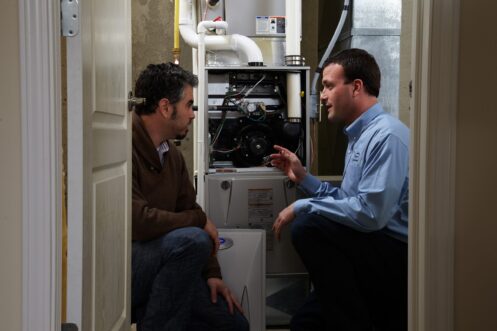
Your furnace works hard to keep your home warm, especially when the weather turns cold. Most days, you never think about what is happening inside that metal cabinet. Yet one small device installed nearby can make a big difference in your safety. TS Heat & Air, in Bethany, OK helps homeowners protect their families by installing carbon monoxide detectors near their heating equipment.
Why Carbon Monoxide Is So Dangerous Around Heating Equipment
Your furnace burns fuel to create heat. Whether it runs on natural gas, propane, or oil, combustion produces carbon monoxide as a byproduct. Under normal conditions, that gas vents safely outside through a flue or exhaust pipe. When something goes wrong, carbon monoxide can leak into the surrounding area.
Carbon monoxide is colorless and odorless. Early exposure often feels like mild flu symptoms. You might notice a headache, dizziness, nausea, or fatigue. Symptoms are common and easy to ignore as the gas continues to build.
The area around your furnace is one of the first places a problem appears. A cracked heat exchanger, a blocked vent pipe, a loose flue connection, or a rusted exhaust joint can allow carbon monoxide to escape before it is safely vented outdoors. Without a nearby detector, you may not be aware of an issue until the gas spreads through the ductwork and into the living areas.
Placing a detector near the furnace creates an early warning system. That extra layer of protection can give you time to shut the system down and call for service.
What Can Go Wrong With a Furnace Venting System
Furnace exhaust systems rely on proper airflow. The vent pipe must remain clear and tightly connected from the furnace to the outside termination point. Small problems in this pathway can lead to larger safety concerns.
Bird nests, debris, snow buildup, or corrosion can restrict the flue. If exhaust gases cannot exit freely, pressure can build inside the system. That pressure can force combustion gases back into the mechanical room.
Metal vent pipes also expand and contract with heating cycles. Joints may loosen. Screws can back out. Older systems sometimes show rust at seams, especially in damp basements or utility closets. Even a small separation at a connection can leak gas.
High-efficiency furnaces use PVC venting. Those pipes must remain properly sealed and pitched to drain condensation. A sag or disconnected joint can create a leak point.
When you install a carbon monoxide detector in the same space as your furnace, you can monitor that venting system directly. If something shifts or deteriorates, you will know sooner rather than later. That early alert supports a repair before the issue becomes more serious.
Why Location Matters for CO Detectors
Carbon monoxide detectors work best when placed correctly. Many homeowners install one in a hallway near bedrooms. That placement is helpful for nighttime protection but does not detect a problem at the source.
The mechanical room, basement, or utility area often contains other fuel-burning appliances such as water heaters or boilers. A single malfunction in that space can affect the entire home. Installing a detector near the furnace helps it sense gas where it first appears.
The detector should not sit directly beside the furnace cabinet. Heat and airflow can interfere with accurate readings. A technician understands spacing, mounting height, and positioning based on the equipment layout for reliable performance.
A detector near the furnace works in tandem with detectors in sleeping areas to create a layered safety system, reduce blind spots and improve response time.
Warning Signs That Your Furnace May Produce Carbon Monoxide
Some furnace problems have visible clues, like rust flakes around the vent connector or corrosion on the heat exchanger spotted during a furnace maintenance visit. A flame that burns yellow instead of blue can signal incomplete combustion, as can soot buildup near the burner assembly. You might also hear unusual sounds during startup, caused by rattling vent pipes or delayed ignition.
Changes in indoor air can offer subtle hints. Stinging eyes, headaches, and other symptoms do not confirm the presence of carbon monoxide, but they signal that the system should be inspected. A carbon monoxide detector provides a clear warning when gas levels rise, so you can treat the situation seriously and move quickly.
How Professional Installation Improves Safety
Installing a carbon monoxide detector involves more than placing a unit on a wall. A professional checks the furnace condition, venting layout, and electrical supply. Hardwired detectors may connect to your home’s electrical system with battery backup. Others operate solely on batteries.
During installation, the technician may test combustion performance. They can measure the flue draft and inspect the heat exchanger for cracks. If any problem appears, they can address it early.
Annual maintenance supports the effectiveness of both your furnace and your detector. Technicians verify that alarms function correctly and that power sources remain reliable. They also confirm that venting stays secure and that combustion stays clean.
You invest in a furnace to keep your home warm. Protecting that investment with proper safety equipment makes practical sense. Carbon monoxide incidents often stem from neglected equipment or overlooked warning signs. Regular inspections combined with correct detector placement reduce that risk.
Protect What Matters Most
At TS Heat & Air, we install CO detectors, perform furnace inspections, and provide heating maintenance that supports safe operation throughout the season. We also provide emergency service if your CO detector alarms or you suspect a furnace issue, so you can get fast help when safety is on the line. Schedule a furnace safety check with TS Heat & Air and make sure your home stays warm and protected all winter long.
